


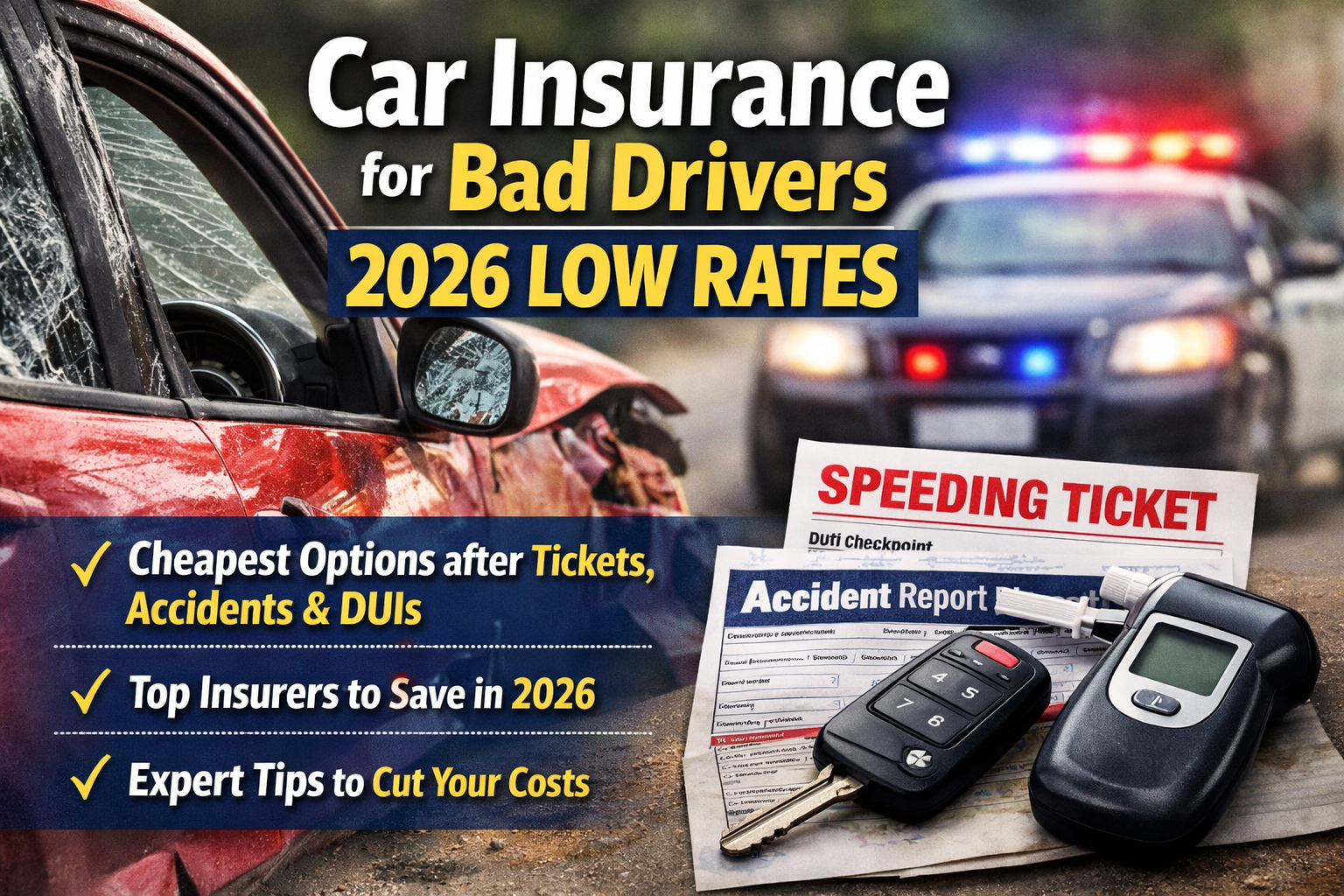
Car Insurance for Bad Drivers in 2026 remains one of the most searched and financially critical topics for American motorists. Drivers with speeding tickets, at-fault accidents, or DUI convictions often face premium increases ranging from 20% to 50%, yet competitive options still exist. The good news at the start of 2026 is that increased insurer competition, telematics programs, and specialized high-risk policies are helping many drivers secure lower rates than in previous years.
If you’re shopping for Car Insurance for Bad Drivers, this comprehensive guide breaks down the cheapest insurers by violation type, average monthly premiums, cost-saving strategies, and emerging market trends shaping 2026.
Why Car Insurance for Bad Drivers Costs More in 2026
Insurance companies price policies based on risk assessment. When a driver has violations on record, insurers classify them as “high-risk,” resulting in higher premiums.
Common Violations That Raise Premiums
- Speeding tickets
- At-fault accidents
- DUI or DWI convictions
- Multiple traffic infractions
- Lapses in coverage
In 2026, the national average for full coverage auto insurance exceeds $2,000 annually for many high-risk profiles. However, rate increases vary significantly depending on the insurer and the specific violation.
Cheapest Car Insurance for Bad Drivers by Violation Type
Not all insurers penalize violations equally. Comparing quotes remains the most powerful strategy for securing affordable Car Insurance for Bad Drivers.
1. Speeding Ticket
A single speeding ticket can raise premiums by 20% to 30%. However, several national insurers remain competitive.
- State Farm: Around $156/month for full coverage
- USAA: Around $153/month (military families only)
- American Family: Around $173/month
Average monthly full coverage range: $150–$230.
2. At-Fault Accident
An at-fault accident typically increases rates by 30% to 50%, depending on claim severity.
- State Farm: Around $218/month
- Progressive: Competitive for accident forgiveness programs
- GEICO: Strong national availability
Average monthly full coverage range: $200–$300.
3. DUI or DWI
A DUI conviction creates one of the highest premium spikes. Drivers may also need SR-22 filings.
- Progressive: Often lowest post-DUI rates
- USAA: Competitive for eligible military drivers
Average monthly premium: $250+, depending on state laws.
Top Insurers for High-Risk Drivers in 2026
Based on current early-2026 data and rate comparisons:
- State Farm – Best overall balance of affordability and claims service.
- Progressive – Strong for DUI cases and usage-based programs.
- USAA – Lowest average rates ($99/month nationally) but limited eligibility.
- GEICO – Competitive online quoting and broad coverage options.
- Non-standard insurers (e.g., The General) – Serve severe cases at higher cost.
How to Lower Car Insurance for Bad Drivers in 2026
Even with violations, drivers can actively reduce premiums by following structured savings strategies.
1. Compare Multiple Quotes
Rate differences between insurers can reach 50% for identical profiles. Use comparison platforms and request at least three quotes.
2. Bundle Policies
- Home + auto bundles can reduce premiums by 10–25%.
3. Complete Defensive Driving Courses
- Potential savings: 5–15%
- Discount validity: Typically 3 years
4. Increase Deductibles
Choosing a higher deductible lowers monthly premiums but increases out-of-pocket costs during claims.
5. Use Telematics Programs
Usage-based insurance programs track driving behavior. Safe habits may prevent future rate hikes and generate discounts.
6. Improve Credit Score
In most states, credit-based insurance scores impact pricing. Maintaining strong credit helps reduce high-risk auto insurance costs.
7. Maintain Continuous Coverage
Avoid policy lapses, which significantly increase high-risk auto insurance premiums.
2026 Market Trends for Car Insurance for Bad Drivers
At the beginning of 2026, the auto insurance market shows signs of stabilization.
- Increased competition among major carriers.
- Broader adoption of telematics programs.
- Expected rate fluctuation between 5%–10% depending on inflation and claims data.
- Regional rate differences remain significant.
Regional insurers like Erie and Auto-Owners offer competitive pricing but operate in limited states. Availability remains a key factor when searching for affordable Car Insurance for Bad Drivers.
Minimum Coverage vs. Full Coverage: Which Is Better?
High-risk drivers often choose minimum liability coverage to reduce costs. However:
- Minimum coverage meets state legal requirements.
- Full coverage includes collision and comprehensive protection.
- Lenders require full coverage for financed vehicles.
Choosing minimum coverage may reduce monthly expenses, but it increases financial risk after major accidents.
Frequently Asked Questions (FAQ)
How long does a violation affect car insurance rates?
Most violations impact premiums for 3 to 5 years, depending on the state and insurer.
Who offers the cheapest car insurance for bad drivers?
State Farm and Progressive frequently offer competitive rates nationally. USAA provides the lowest averages for eligible military families.
Can I get affordable insurance after a DUI?
Yes, but premiums will be significantly higher. Progressive is often competitive for DUI cases, and completing required state programs can help reduce long-term costs.
Will rates decrease over time?
Yes. Maintaining a clean driving record and continuous coverage gradually reduces premiums.
Is high-risk auto insurance different from standard coverage?
Coverage types are similar, but pricing and underwriting criteria are stricter for high-risk drivers.
Final Thoughts: Finding the Best Car Insurance for Bad Drivers in 2026
Car Insurance for Bad Drivers does not have to mean unaffordable premiums. While violations such as speeding tickets, at-fault accidents, and DUIs increase rates, strategic comparison shopping and discount optimization can dramatically reduce costs.
In 2026, drivers benefit from stronger competition among insurers, expanded telematics programs, and more customized pricing models. By comparing quotes, leveraging defensive driving discounts, and maintaining continuous coverage, even high-risk drivers can secure manageable premiums and rebuild their insurance profile over time.


